
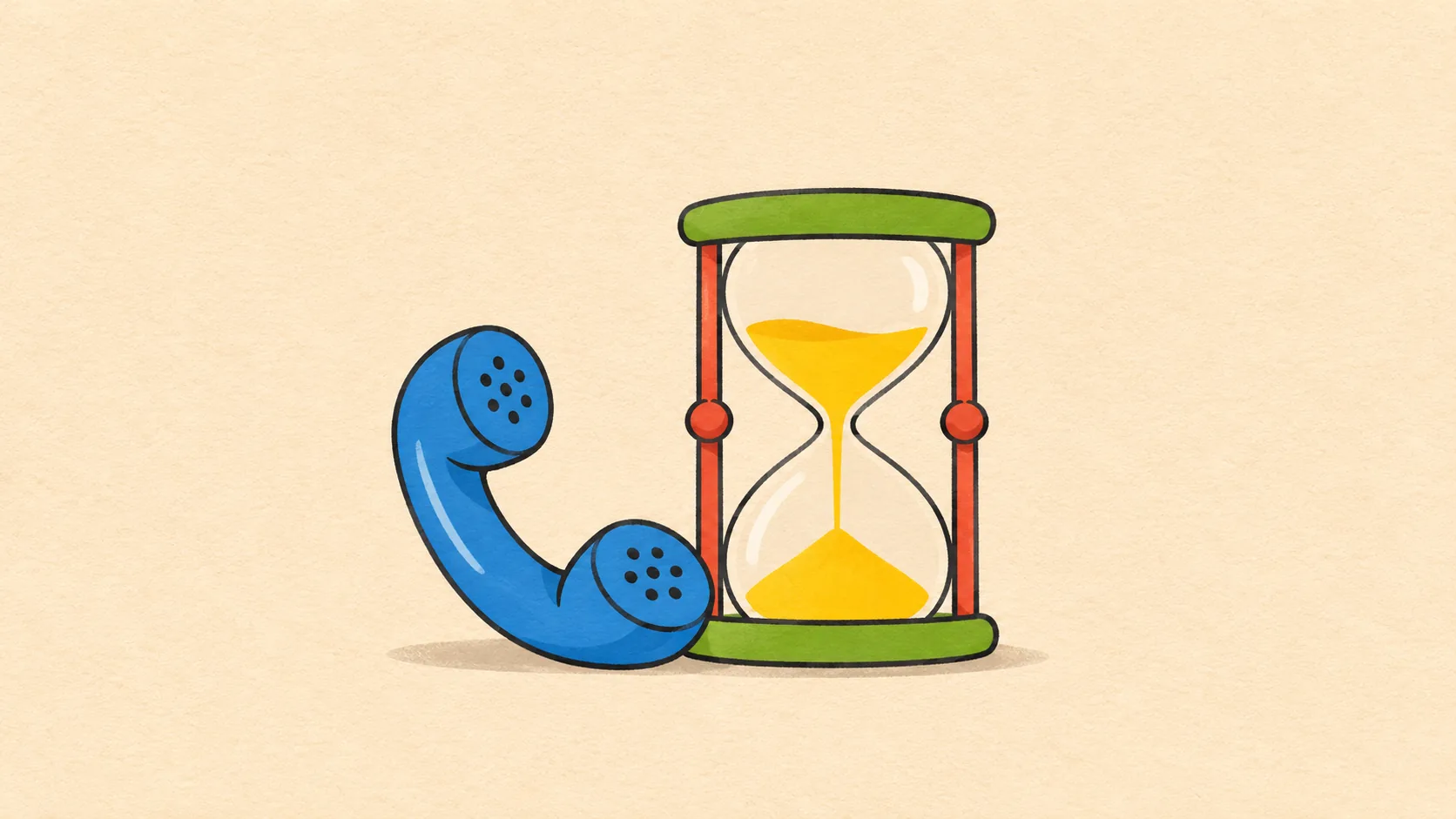
You are under a customer's sink, both hands busy, when your phone buzzes in your pocket and then goes quiet. You cannot tell whether that was a quote request, a spam call or someone with water on a floor, and you cannot tell whether voicemail, an answering service or an AI on the line would have kept them from dialing the next business.
Voicemail asks the caller to leave a message and wait, an answering service puts a person on the line, and an AI on the line puts a voice there. Our view: pick by answered calls that turn out to be real leads, not by how the greeting sounds.
The short answer
- Voicemail, an answering service and an AI on the line each ask something different of you.
- The one check no listing edit can cover is whether the call got answered.
- Sort real leads from wasted calls before you judge any of the three.
The same call, three ways
Take one invented example: a caller with a burst pipe rings your business while you are on a job. Run that single call through three setups and compare what the caller meets, which is the only side of the call they ever see. The three phones below show the same call ending three different ways.
- Voicemail: a greeting, a beep, a message to leave.
- Answering service: a person takes the details.
- AI on the line: a voice replies while you work.
- Your Business
Voicemail
Message left
- Your Business
Answering service
Person took details
- Your Business
AI on the line
Reply while you work
An invented example: the same call met three ways. Nothing on these phones is a measurement.
In the first version, the example caller hears a greeting, a beep and a request to leave a message. The pipe is still running, so in this made-up case the caller hangs up and dials one more number.
In the second version, a person answers, asks for the address and says the details will be passed to you. That is a real conversation, and the caller feels it. What the caller cannot know is how long it will take you to read the note, because you are still under the sink.
In the third version, a voice answers while you are still under the sink and the caller gets a reply instead of a beep. What happens after that depends on how the setup was built and checked, which is why the answered-call count matters more than the demo.
What each option asks of you
Every option moves work somewhere, and what it moves onto you is attention, which no report ever shows. The table lays the three side by side: what the caller meets on the left, what it asks of you on the right.
-
Voicemail
What the caller meets
A greeting, a beep, a message to leave
What it asks of you
A callback you have to remember
-
Answering service
What the caller meets
A person who takes the details
What it asks of you
Notes to read and calls to sort
-
AI on the line
What the caller meets
A voice that replies while you work
What it asks of you
Checking what it collected, now and then
Voicemail costs you a callback you may or may not get to. A person at a service costs you a note to read and a decision about who to ring. A voice on the line costs you the checking: hearing a few calls to see whether it got them right.
Notice what the table leaves out: a winner. We do not think one of the three wins for every owner. A solo plumber on a roof and a crew with a dispatcher need different things, and so does an owner who calls back within minutes and one who calls back at night. Our view: the right option is the one whose callback or review work you will really do, on a busy day, with a job running late.

Our view on what the caller does next
Our view: an urgent caller who reaches no one may well try the next business, and the same caller who reaches someone has a reason to stay. We have no count for how often, and we will not invent one. That is a hunch, not a statistic.
Judge a call setup by the answered calls that were real leads, never by how the greeting sounds.
Here is why the greeting is the wrong thing to judge. A caller never hears your intentions. They hear whatever picks up, or nothing at all. Two setups with the same friendly greeting can leave very different numbers of real people helped, and only your call log shows which one you have.
Your side of the phone is easy to overrate. You see a missed call with a time on it, and maybe a voicemail icon. The caller sees none of that. They only know what happened after they pressed the green button, and anything your setup does after that moment is invisible to them.
Who is in the example call
-
You, on a job
Hands busy, phone in a pocket
-
The example caller
Water on the floor and a search page open
The one deciding
-
You, that evening
A call log with times and maybe a voicemail
The hour where your phone and your listing disagree
Before you pick any setup, check the ad schedule, the phone hours and the listing hours side by side after any hour shift. The hour where one of them disagrees is the hour you either pay for silence or turn away calls. We think any answering setup does its job when those three clocks agree.
We walk through that side-by-side check in a post on how the ad schedule, call hours and listing hours agree. If you run ads, they sit in Google Ads, and your listing lives in your Google Business Profile, so two of the three places to compare are easy to find.
A concrete way to run it: write the three sets of hours on one sheet of paper, and add the hour your phone really rings through to you. Then change one thing, an hour on the listing or in the schedule, and write the new sheet. The point is not tidiness. The point is that the caller meets one business with one set of hours.
Settle it with answered calls
Check the easy things first: the number, the hours, the photos, the reviews, the page on a phone. Then finish with answered calls, the one check no listing edit can cover. Whatever you choose for the phone, that count tells you whether it worked.
Judged by the greeting
- Does the greeting sound friendly?
- Does the voice sound human?
- Does the setup look modern?
Judged by answered calls
- How many calls reached a person or a voice?
- How many of those were real leads?
- How many were wasted calls you can sort out?
To make the count honest, compare ad spend with calls from ads for the same stretch of weeks, then sort real leads from wasted calls. We lay the method out in read your ad bill next to your call log. A wrong number that got answered is not a win, and a real job that went unanswered is the call to study. Our view: that second pile is where voicemail, a service and an AI differ most.
There is a free page that lets you work out what your missed calls cost, if you want a number to set beside the count. Then Optymize the choice: run one setup for a few weeks and compare the answered-call count with the one you started from.
-
Greeting The belief A friendly greeting keeps the caller.
Greeting What to check Our view: a greeting matters only once something answers. Count answered calls instead. -
Listing The belief Fix the listing and the phone will ring.
Listing What to check Start with the number, hours, photos, reviews and the page on a phone, then count answered calls. -
Hours The belief My hours are right in one place, so they are right.
Hours What to check Lay the ad schedule, phone hours and listing hours side by side and find the hour where one disagrees.
Tap a card to see what to check instead of what to assume.

If you decide a voice on the line is worth testing, how we think about putting an AI on the line is the place to read next. Take the same rule with you: count the answered calls before, count them after, and keep whichever option earns more real jobs. If voicemail or a service already wins on your own log, keep it.
Before you pick a setup
Talk to Offer before you decide anything.
You'll talk with Offer, not a sales rep. A short call, no pitch deck.
Talk to OfferThis post was drafted with AI tools from our own project records, anonymized, and checked by us before it published. Read our editorial standards.