
Urgent calls, plans and Maps
Marketing for pest control companies
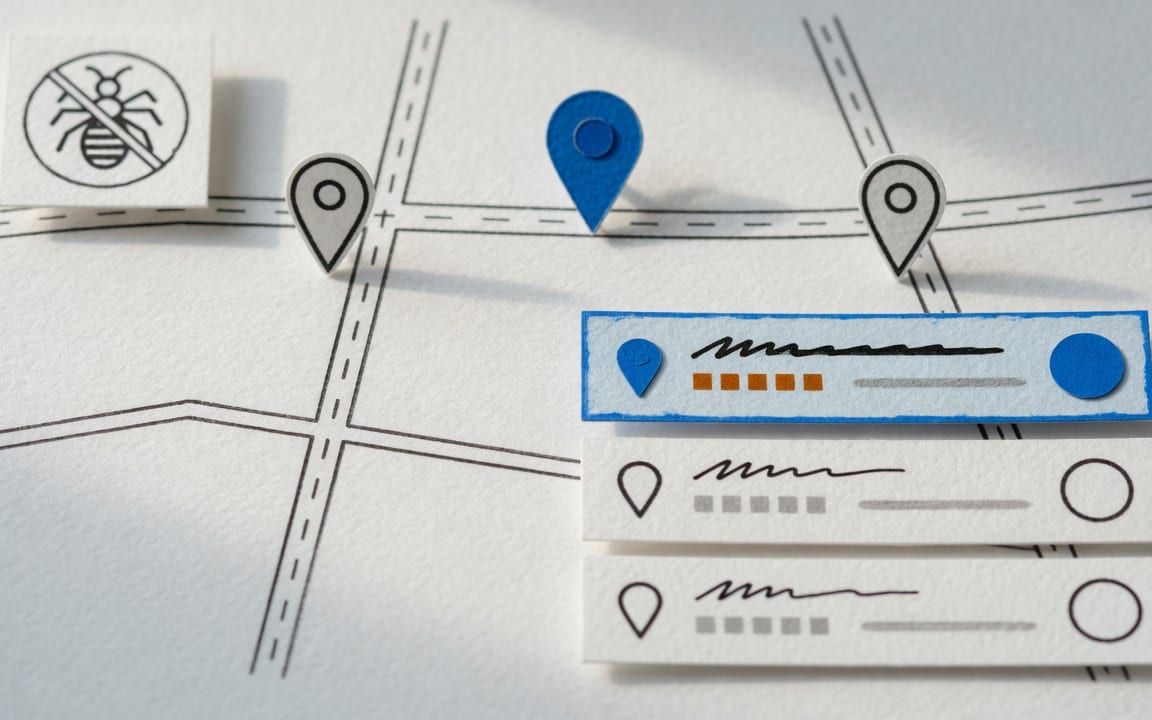
We help your pest control company answer the urgent call, show up on Google Maps nearby, and turn one visit into a recurring plan.
- years Offer has run digital marketing
- 20
- the year Optymizer was founded
- 2011
- call is always with Offer, the founder
- 1st
- service businesses are our only focus
- Local
Where calls get lost, and what we change
-
On a wasp nest call
Where calls get lost
The call goes to voicemail.
What we change
An AI phone agent answers and sends you the job.
-
On your website
Where calls get lost
One page lists every pest you treat.
What we change
A page each for termites, rodents, bed bugs and wasps.
-
After the first visit
Where calls get lost
The customer never hears back.
What we change
A follow-up that offers a recurring plan.
What your customers type
People search for the pest they just found, and they want help soon. An AI phone agent answers while your techs are out, your Google Business Profile, the listing on Maps, shows the towns you serve, and local SEO gives each pest its own page.
- “pest control near me”
- “termite inspection”
- “bed bug treatment”
- “rodent removal”
- “wasp nest removal”
- “ant exterminator”
Our stack for pest control
-
AI phone agents
Answers while your techs are on a job, asks what the pest is and where, and passes the call on with the details.
-
Local SEO
A page for each pest you treat and each town you serve, so the search finds you.
-
Google Business Profile
A service-area listing with your towns, hours and the services you offer.

How the work goes
-
Step 1: A call with Offer
Tell Offer, the founder, which pests and seasons you want more of.
-
Step 2: License and profile first
Your certification on the site, and a clean service-area profile.
-
Step 3: Pest pages, then check in
A page per pest and season, then a monthly look at your own data.
What the rules say
Many states require a license to apply any pesticide for pay, and EPA lets only certified applicators use restricted use products. A worried customer checks before letting a tech inside, so your certification belongs on your site. Pest control is also a Local Services Ads category, and a service area tells Google which towns you treat.
Many state pesticide regulatory agencies require applicator certification to use all pesticides commercially, whether or not they are RUPs.
Illustrative
Questions pest control companies ask
Should my license show on my website?
Yes. Many states require applicator certification for commercial pest control, and customers look for it. We put your license or certification number in the footer and on every pest page.
Do I need a page for each pest?
Yes. Someone with termites wants a page about termites, the inspection and what happens next, not a list of every pest you treat.
How do I sell recurring plans?
A follow-up after the first visit that explains the plan, a page for it, and seasonal reminders before the pests come back, such as ants in spring.
Who answers an urgent wasp call?
An AI phone agent can answer, ask what the pest is, where it is and how bad it looks, then pass the job to you. You decide what it says.
Should I run Local Services Ads?
Where they fit. Pest control is one of Google's Local Services Ads categories, and you pay only for leads. Offer will tell you on the first call whether they suit your area.

Talk to Offer before you decide anything.
You'll talk with Offer, not a sales rep. A short call, no pitch deck.
Pick a time on the contact page, or call. Offer will ask about your business, then tell you honestly what he'd do first.